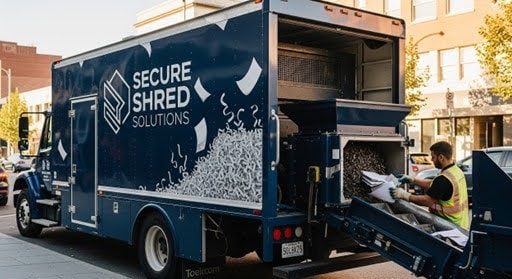
What Is a Document Destruction Policy?
A document destruction policy refers to a company policy that dictates how your business handles the destruction of information, such as sensitive documents.
Your destruction policy must include the following:
- Retention period for various types of documents before you must legally destroy them.
- The destruction methods you will use, such as shredding, hard-drive wiping, or media destruction services like degaussing.
- Employee training schedules to ensure staff fully understand best practices for secure document destruction.
- An audit trail that records the process of managing, tracking and destroying documents according to regulatory compliance.
A document destruction policy ensures that your business is safe from unauthorised access to confidential information in physical records and electronic information. This mitigates the risk of potential identity theft, fraud or data breaches, and non-compliance.
Document Destruction: A Vital Component of Business Security
Document destruction involves the secure destruction of physical documents and electronic data to protect your company against identity theft, data breaches and fraud, and to prevent regulatory violations.
In a more digital landscape, information is mostly stored on digital files, USB drives and hard drives. However, paper records and documentation are still prevalent. Documents such as customer credit card information, contracts, financial records, medical information and employee details are still predominantly paper. Shredding is one of the most secure disposal methods, and document destruction providers, such as a professional shredding company, provide a certified solution.
Protecting Against Identity Theft
Identity theft, fraud and data breaches are a significant threat — businesses are a prominent target. Because your business handles sensitive information such as financial information, customer data, employee details, credit card information, and other confidential documents, a comprehensive document destruction process is essential.
By implementing a document destruction policy that ensures proper document shredding and disposal protocols are followed, your business is protected against these risks. Furthermore, it ensures compliance and maintains customer trust and business reputation.
Regulatory Compliance: Why It Matters
Additionally, a document destruction policy ensures that your organisation is compliant with regulatory laws such as:
- General Data Protection Regulation (GDPR)
- Health Insurance Portability and Accountability Act (HIPAA)
- Fair and Accurate Credit Transactions Act (FACTA)
These laws require that your business securely manages and disposes of sensitive documents within their retention period. Failure to comply with regulations could result in significant fines, a loss of customer trust, and errors in regulatory practices.
The best option is to partner with a professional NAID AAA-certified document destruction service provider for secure shredding of documents and destruction of hard drives.
NAID AAA Certification: A Key Standard for Document Destruction
The National Association for Information Destruction (NAID) is a leading global authority on document destruction services. Their certification guarantees that the document shredding service provider you choose follows the highest standards of security and regulatory compliance.
Shredding and data wiping services provided by a company with NAID AAA certification guarantee the most stringent regulatory requirements for secure document destruction. Their compliance ensures the destruction of data to protect your business against identity theft, data breaches, and fraud.
The Role of Document Shredding in Protecting Your Business
Document shredding is the most sensible method of disposal for your document destruction policy. However, in addition to paper shredding, your business must also have a policy in place for destroying digital data and electronic information.
A multi-layered document destruction policy will include:
- Physical Document Shredding — Shredding of all paper documents, preferably using a provider with industrial-grade shredding services.
- Hard Drive Destruction — Deleting data on your computer or hard drive does not erase everything; destroying hard drives or wiping is the safest method.
- Data Wiping for Digital Devices — Mobile phones, flash drives, and other electronic media require efficient wiping to dispose of all sensitive data.
Ultimately, a professional document shredding provider helps your business maintain security, whether documents are in physical form or stored electronically.
Understanding Corporate Espionage: Mitigating the Risks
Corporate espionage refers to the act of stealing proprietary information from a company, such as trade secrets or any other intellectual property, for financial gain. It has devastating consequences for businesses that deal with confidential data, especially in technology, finance, or healthcare.
Strict document destruction protocols — shredding documents and destroying hard drives with intellectual and personal information — ensure your company's safety against espionage and potential security breaches.
Tips on Creating an Information Destruction Policy
Conduct a Document Audit
Identify the various types of sensitive documents that your company handles. These could include employee records, customer information, contracts, and financial data.
Establish Retention Periods
Adhering to legal retention requirements and industry standards is essential. Research and understand the specific retention periods for various documents, and dispose of documents that have passed their due date.
Define Destruction Methods
Choose a destruction method for your paper documents, digital files and electronic storage devices. A few methods include shredding, data wiping, and complete hard-drive destruction.
Partner with Certified Providers
Using a professional shredding service provider is the best solution, especially for paper documents. Ensure that they are certified and follow security protocols that comply with federal privacy laws. A NAID AAA-certified document destruction service offers the highest standards and issues a certificate of destruction as proof.
Train Employees
Employees require proper training to understand why your business needs a document destruction policy and how to implement it effectively, so they handle sensitive information safely and prevent security breaches.
Why Your Business Can't Afford to Skip Document Destruction
Document destruction forms a critical component of a successful data-security strategy. It protects against risks such as identity theft, corporate espionage, fraud, and data breaches, ensuring you follow regulatory compliance. Partnering with NAID AAA-certified providers for shredding confidential documents protects your company, its sensitive data, and the environment.
Final Thoughts
Adopting a robust document destruction policy protects your business and secures vital information. By incorporating document shredding and using a certified shredding provider, your business can easily handle sensitive information and avoid costly fines and a loss of reputation.